Old Dutch Foods
Candy Manufacturer Replaces Belt Conveyors with Slipstick Sanitary
Customer Challenge
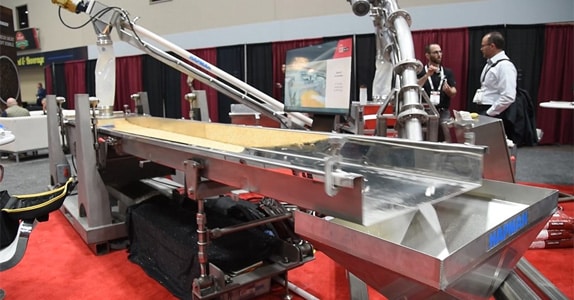
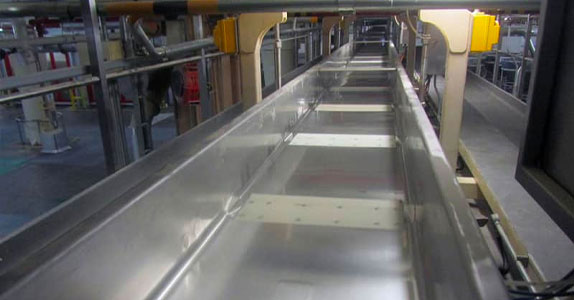
A leading candy manufacturer and distributor contacted Triple/S Dynamics after visiting our website and viewing our processing equipment videos. They were looking to replace their existing belt conveyors handling both wrapped candy and unwrapped chocolate frap chips on a 24/7 production line.
Their belt conveyors had two recurring issues common in food grade conveying applications:
Their belt conveyors had two recurring issues common in food grade conveying applications:
- Belt tracking problems. The belts were drifting out of alignment, causing the edges to fray and creating ongoing maintenance and replacement costs.
- Product fines buildup. Fines from the candy were accumulating on the conveying surface, making the belts difficult to clean and creating sanitation challenges.
Triple/S Solution
Triple/S Dynamics approached the replacement project the same way we handle most food grade conveyor evaluations, with data first.
Step 1: Lab testing. The customer supplied product samples of both wrapped candy and unwrapped chocolate frap chips. Triple/S Dynamics ran multiple lab tests on these samples to measure two critical variables:
- Bulk density, which determines the load the conveyor needs to handle at the customer’s target throughput
- Conveying velocity, which determines how the product behaves on the conveying surface and informs the pan sizing and drive selection
Step 2: Site visit. After lab testing was complete, Triple/S Dynamics traveled to the customer’s facility to walk the production line in person. The site visit served two purposes: review the current processing layout to understand integration points with upstream and downstream equipment, and discuss replacement options for the existing belt conveyors with the customer’s engineering and maintenance teams.
This combination of lab testing and on-site evaluation is standard practice for any belt conveyor replacement in a food grade environment, where product handling, sanitation, and line integration all need to be considered before specifying equipment.